
How to Start a Shipping Container Storage Business
By The Unit Manager Pro Team · 23 October 2026 · 4 min read
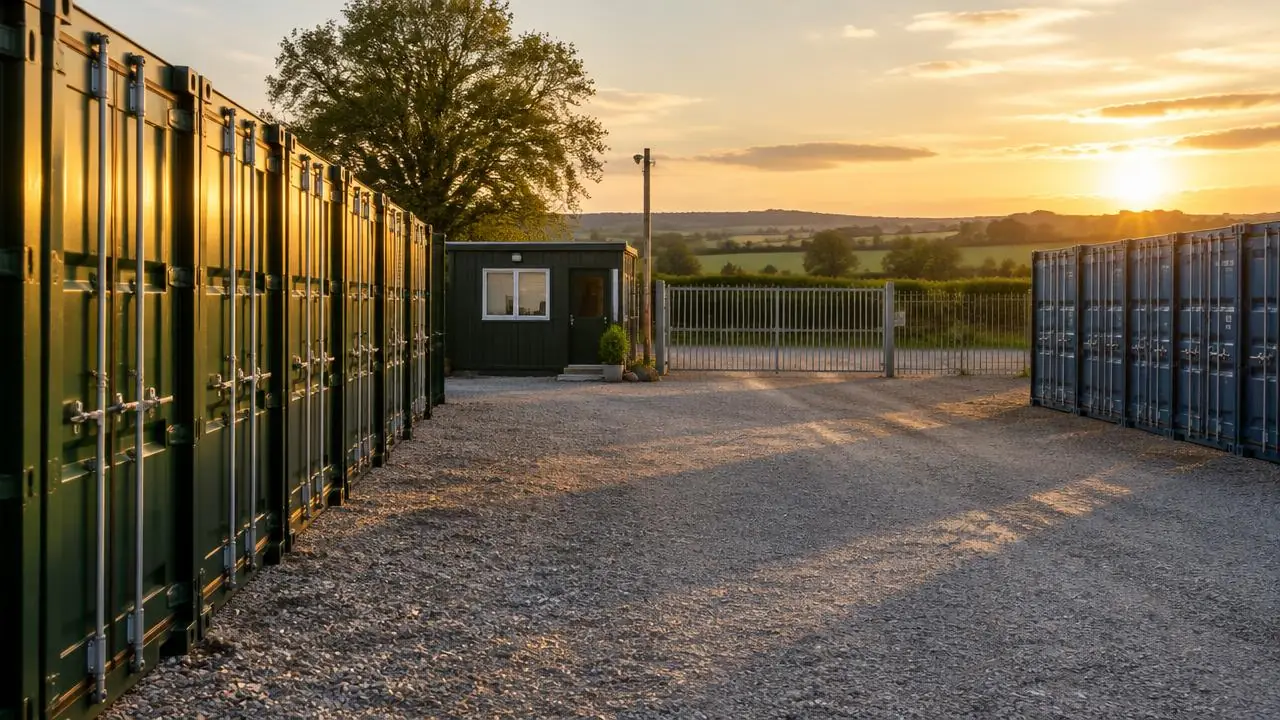
A shipping container storage facility rents individual containers to customers who need secure space. A viable business needs more than enough land for a row of containers: customers need workable access, the site needs appropriate permissions, and rent must cover both the units and the costs of running the yard.
14-day free trial · No credit card required · Cancel anytime
Plan your yard with Unit Manager Pro
Start with a free container layout. Add your supplier quotes and running costs when you are ready, then explore how to manage the facility.
Choose the customers before buying containers
Compare household storage, tradespeople and business stock requirements in your local area. Ask about size, drive-up access and access hours. Check container condition, weather resistance, locks and ventilation with your supplier; do not market ordinary containers as climate controlled.
Check the site and delivery route
Before committing to a site, confirm its proposed use and works with your local planning authority. Containers being movable does not establish that permission is unnecessary. Start with the GOV.UK planning permission guidance, which also links to the separate national systems. Obtain site-specific advice on access, drainage, fire safety and any operating restrictions.
Ask the supplier how containers will be delivered and lifted into position. Include the delivery vehicle, lifting space, ground-bearing requirements and access restrictions in the site review. Reserve areas for an office, customer parking, drainage and security equipment before calculating rentable capacity.
Build a layout around access, not just container footprints
The Unit Manager Pro yard planner compares candidate layouts around your gate, aisles, container mix and reserved areas. You can use a rectangle, an L-shaped preset or multiple rectangular areas. Irregular or angled boundaries need conservative rectangles that fit inside the actual surveyed boundary.
- Enter each usable area's dimensions and entrance position.
- Add an office by the gate, then drag it or enter a position to suit the site.
- Compare 10ft, 20ft, 40ft or custom sizes, using supplier dimensions and quantity limits.
- Have turning space, fire access, drainage and connections between separate areas reviewed before ordering.
How many containers fit on an acre?
Work through a phased opening
For an illustrative 40-container plan, you might purchase 20 initially and consider the remainder later. Model that first phase against the full site rent and security bill. In the planner's full-costing mode, enter the phase-one share, expansion month and months to mature occupancy. Expansion is an assumption to test, not a purchase commitment.
Use the container storage startup-cost breakdown to obtain quotes and the financial model guide to test slower demand. Inspect and document the site before the first customer arrives.
Turn available containers into bookable units
Add unit numbers, sizes and monthly prices in your management software, then connect each rental to a tenant and agreement. Show current availability on your container-storage booking website. Test an enquiry, an agreement and payment setup before inviting real customers.
The planner's demo link carries the phase-one unit count into your request. The instant demo uses a sample facility; it does not recreate the drawing. The separate facility-setup option lets you review planned sizes and quantities before creating inventory.
See how you could run your container yard
Start your 14-day free trial — no card required. Or book a 20-minute demo tailored to your facility.
Frequently asked questions
Can I plan a container yard without entering costs?
Yes. Layout-only mode lets you compare capacity and export a preliminary layout. Switch to full costings when you have rents, purchase quotes and operating costs to model.
Does a container yard have to be square?
No. The planner supports rectangular dimensions, an L-shaped preset and separate rectangular areas. It does not design arbitrary polygons or validate vehicle routes between areas.
Is container storage automatically profitable?
No. Profitability depends on achieved rent, occupancy, land and operating costs. Test the opening period and downside assumptions before committing to a site or container purchase.
Related features
Self Storage Website Builder
Get a storage website with live availability and online booking, built from your unit list. Included in every plan, live in minutes.
Read the feature overview
Self Storage Software for Small Facilities
For independent owners who want bookings, tenant records and rent administration in one place, with pricing based on leased units.
Read the feature overview
Related reads
Container Storage Business Startup Costs: Build Your Budget
Separate container purchase, site works and opening cash needs. Use a worked example, then replace every assumption with your quotes.
Read article
Self Storage Financial Model: From Capacity to Cash Flow
Choose the right free calculator and test your assumptions before committing to a site or expansion.
Read article
Container Storage Website: From Yard Inventory to Online Bookings
A container-yard website should show the actual units, their access arrangements and the route to rent them. Use your inventory as the starting point.
Read article
Get the self-storage operator newsletter
Practical tips on rent collection, occupancy and growth. One email a fortnight, no spam.