
Self Storage KPIs: Definitions, Formulas and Worked Checks
By The Unit Manager Pro Team · 23 February 2026 · 3 min read · Updated 24 October 2026
Agree what each metric measures before using it to make a decision. Occupancy, scheduled rent, cash received and website enquiries describe different parts of the business.
14-day free trial · No credit card required · Cancel anytime
Physical and economic occupancy
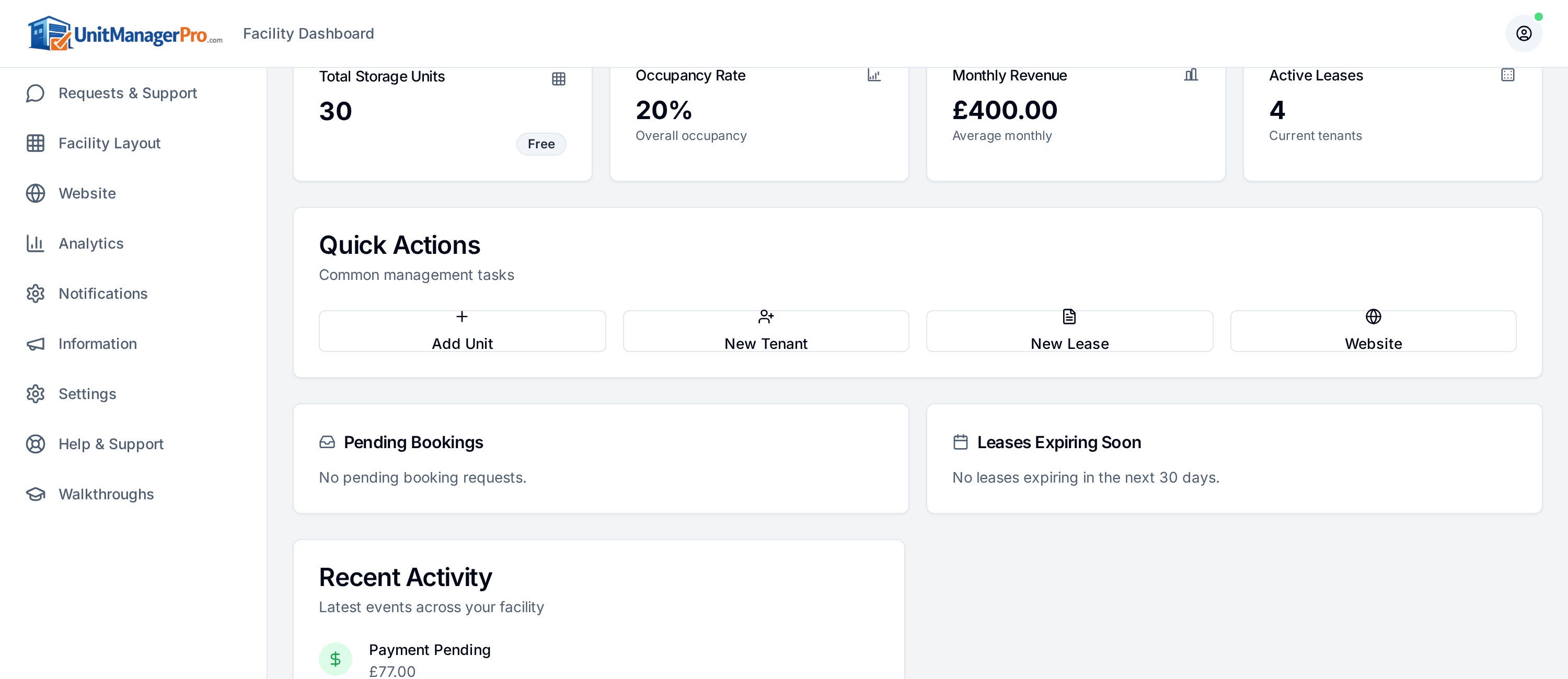
Physical occupancy compares occupied inventory with the chosen total. State whether you measure units or area. Economic occupancy compares contracted rent with potential rent at the stated list prices. Ten occupied small units do not necessarily generate the same rent as ten large ones.
Rent roll and cash
The monthly rent roll is contracted rental income, not necessarily settled cash. UMP’s rent-roll view separates physical/economic occupancy, average rent, collected and processing amounts and outstanding amounts. Check the selected period and underlying records.
Moves and website activity
Net move-ins compare move-ins and move-outs over a period. In the current website analytics card, conversion rate uses quote submissions divided by page views; it is not completed rentals divided by unique visitors. Keep that definition beside any report you share.
Additional measures
Revenue per available area needs a clearly defined period and area denominator. Days sales outstanding is a receivables/credit-sales measure, not simply average arrears age. If you calculate additional metrics outside the product, document the formula instead of claiming they are all built-in.
Run a sample check
If 16 of 20 units are occupied, unit occupancy is 80%. Reconcile that count to leases and check unusual statuses. Review the reporting dashboard with real definitions and compare consistent periods before changing prices.
Track self storage KPIs in one dashboard
Unit Manager Pro's reporting dashboard puts occupancy, revenue, arrears, churn and lead conversion in one place, using the same unit, lease and payment records you manage every day, so the numbers are never a separate spreadsheet to maintain.
Take the admin off your desk
Start a 14-day free trial with no credit card, or book a 20-minute demo to see which of these tasks the software can handle for your facility.
Frequently asked questions
What KPIs should a self storage owner track?
Physical occupancy, economic occupancy, rent roll, cash collected against rent scheduled, moves in and out, arrears and website enquiries converted to rentals.
What is the difference between physical and economic occupancy?
Physical occupancy counts rented units against available units. Economic occupancy compares contracted rent with the rent possible at list prices, so it also reflects discounts and different unit rents.
Related features
Related reads
Self Storage Pricing Strategy: Test Rates and Occupancy
Choose rents using local alternatives, unit differences, operating costs and demand. Use explicit scenarios instead of a universal occupancy threshold for price changes.
Read article
How to Improve Self Storage Occupancy: Diagnose the Bottleneck
Low occupancy can reflect weak demand, unsuitable sizes, poor enquiry handling or customer departures. Find the cause before changing the price.
Read article
Multi-Site Storage Software: A Requirements Checklist
A portfolio needs clear separation of local operations and central reporting. Unit Manager Pro runs several sites from one account on request, with a location switcher, site-only staff access, per-site payments and a landing page for each location.
Read article
Get the self-storage operator newsletter
Practical tips on rent collection, occupancy and growth. One email a fortnight, no spam.